plants

Type: 
Topical Term
Subfield: 
a
Alias: 
plants

Insects as decomposers

2017
Insects break down animal and plant matter.

Strange plants

1997
Deep in a swamp three unsuspecting bugs get caught by three hungry plants.

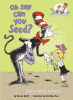
Oh say can you seed?

all about flowering plants
2001

Do plants have heads?

learning about plant parts with the Garbage Gang
2016
Humorous text and characters teach kids about plant parts.

Why do plants have stems?

2016
Stems may not be one of the flashiest plant parts, but they’re certainly one of the most important. This text introduces readers to plant stems and uses age-appropriate language to explain what they look like, how they grow, and what role they play in a plant’s life. Readers will walk away understanding plant parts work together for the plant’s survival. Written to support key life science concepts, this text makes it fun to learn about plant parts.

What happens to plants in summer?

2015
This Level 1 guided reader examines how seasonal changes in summer affect plants. Students will develop word recognition and reading skills while learning about the summer rain and sun, plant growth, and ripening fruit.

Why do plants have roots?

2016
One of the most important plant parts is something we can’t always see: Roots! This volume shows readers why roots are essential to plant growth and survival. Key topics include roots’ role in taking in water, anchoring plants in the ground, and more. Highly detailed color photographs allow readers to see this often hidden plant part, which encourages readers to visualize what they’re reading. Age-appropriate text supports elementary science curricula.

Why do plants have flowers?

2016
Flowers are beautiful and fragrant, and they’re also a key stage in a plant’s life cycle. This age-appropriate text introduces readers to the basic anatomy of a flower, which is supported by highly detailed color photographs. Readers will understand fundamental life science concepts, such as the relationship between flowers and pollinators and how flowers play a role in producing the next generation of plants. This text offers a fun-yet-educational take on important classroom concepts, which is sure to get readers excited to learn about plants.

Pages

Subscribe to RSS - plants