cognitive neuroscience

Type: 
Topical Term
Subfield: 
a
Alias: 
cognitive neuroscience

Top brain, bottom brain

surprising insights into how you think
2013
Describes how the top and bottom parts of the brain work together, and introduces four modes of thought: Mover, Perceiver, Stimulator, and Adaptor.

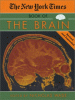
The New York times book of the brain

2001
Contains nearly fifty articles reprinted from the Science Times section of "The New York Times" from 1992 to 2000 which report on scientific discoveries in the field of brain research, covering the senses, mood and emotions, memory, language, the mind, sleep, and other topics.

The brain's behind it

new knowledge about the brain and learning
2005

How to explain a brain

an educator's handbook of brain terms and cognitive processes
2005

The owner's manual for the brain

everyday applications from mind-brain research
1994

Proust and the squid

the story and science of the reading brain
2008
Explores how the intellectual evolution of man was forever altered when, just a few thousand years ago, the human brain evolved enough to learn how to read and understand written words.

Left brain, right brain

perspectives from cognitive neuroscience
1998
Describes research in brain assymetry and brain-behavior relationships, drawing from normal, split-brain, and brain-damaged cases to discuss such topics as left-handedness, sex differences, psychiatric illness, learning disabilities, and theories of consciousness.

The Scientific American book of the brain

1999
Presents twenty-six articles from the pages of "Scientific American" magazine, in which the authors, including scientists, clinicians, and other experts, discuss various aspects of the workings of the human brain.

The believing brain

from ghosts and gods to politics and conspiracies--how we construct beliefs and reinforce them as truths
2011
Presents the author's theory on the way humans form beliefs, arguing that the brain looks for patterns in sensory data, attaches meaning to these patterns, and then searches for confirmatory evidence in support of these beliefs.

Pages

Subscribe to RSS - cognitive neuroscience