Examines the major inventions that have changed how and what people eat including canning and pasteurization, refrigeration, supermarkets, and genetically modified foods.
Presents a history of Angel Island on San Francisco Bay where many Asian immigrants were processed before entering the United States, and describes the various reason why those such as the Chinese desired to come to America.
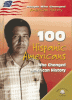
Chronicles the lives of one hundred Hispanic Americans who made a significant contribution to American history including Civil War hero, David Farragut, musician Tito Puente, and baseball great Roberto Clemente.
Explains the circumstances that led to the tragic 1911 garment factory fire that killed 146 people, examines the role of unions and reformers, and details how public opinion eventually forced state governments to legislate for safe working conditions.
Describes the history of the five tribes of Southeastern America, the Cherokee, Chickasaw, Choctaw, Creek, and Seminole, especially their forcible removal in the 19th century to the Great Plains.
Presents an account of the March on Washington for Jobs and Freedom which took place on August 28, 1963, examines events that inspired the march, and discusses the history of the civil rights movement.
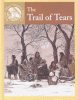
Easy-to-read text, historic art and photography, maps, and activities help introduce young readers to the events surrounding the journey made in the 1830s by sixty thousand Native Americans from the southeastern part of the United States.
Examines radio and television technology in relation to earlier inventions of the telephone and telegraph, the impact of radio on the people, early broadcast personalities, and advances in satellite and digital services.
Chronicles the arduous journey of a twelve-year-old English girl and her mother as they flee with other religious protesters to the New World in the early 1500's, and the heartbreak and hope they find when they arrive.